
Why Your Eastbourne Postcode, Parking & Access Can Make — or Break — a Fair House Clearance Quote
Introduction: Local details matter for house clearance in Eastbourne
If you’re searching for house clearance eastbourne, rubbish removal eastbourne or cheapest rubbish clearance eastbourne, the figures you see online can be a helpful starting point — but the true price often comes down to three local realities: postcode location, parking and physical access. City Clearance teams price work based on time, labour and disposal costs. When crews encounter restricted parking, long carries, narrow staircases or extra waiting time because of permits, those costs rise.
How postcodes influence your Eastbourne house clearance price
1. Distance and travel time
Although Eastbourne is compact, travel time to your property still matters. Crews are likely to set different call-out bands for town-centre jobs versus outlying areas. If teams need to travel across East Sussex or make multiple round-trips to disposal sites, fuel and staff time add to the job cost.
2. Location-specific parking rules and resident zones
Different streets have different parking controls: town-centre loading bays, residents’ permit zones, parking meters and time-limited bays. If a job needs a temporary suspension of parking bays or a residents’ permit for a clearance vehicle, suppliers may charge for the permit application and the extra time spent moving vehicles. Always flag controlled parking zones when asking for a quote.
3. Congestion and pedestrianised areas
Eastbourne’s seafront, shopping streets or event areas (e.g., near the pier or bandstand) can be busy. Crews working where access is restricted to delivery windows or where unloading must happen behind barriers will need longer on-site times — and quotes reflect that.
Practical tip
When you request a quote, give the full postcode and describe the nearest loading point and any parking restrictions. This reduces guessing and helps you get an accurate house clearance quote.
Parking: the single biggest hidden cost-driver
Common parking-related issues and how they add to price
- No legal parking outside the property: crews may need to park further away and do a long carry, raising labour time.
- Metered or limited-time bays: waiting or moving vehicles to avoid fines takes staff time.
- Loading-only areas with time windows: limited slots can stretch the job over multiple trips.
- Residents’ permits needed: suppliers may charge for obtaining temporary permits or for time spent handling appeals.
Examples relevant to Eastbourne homeowners and landlords
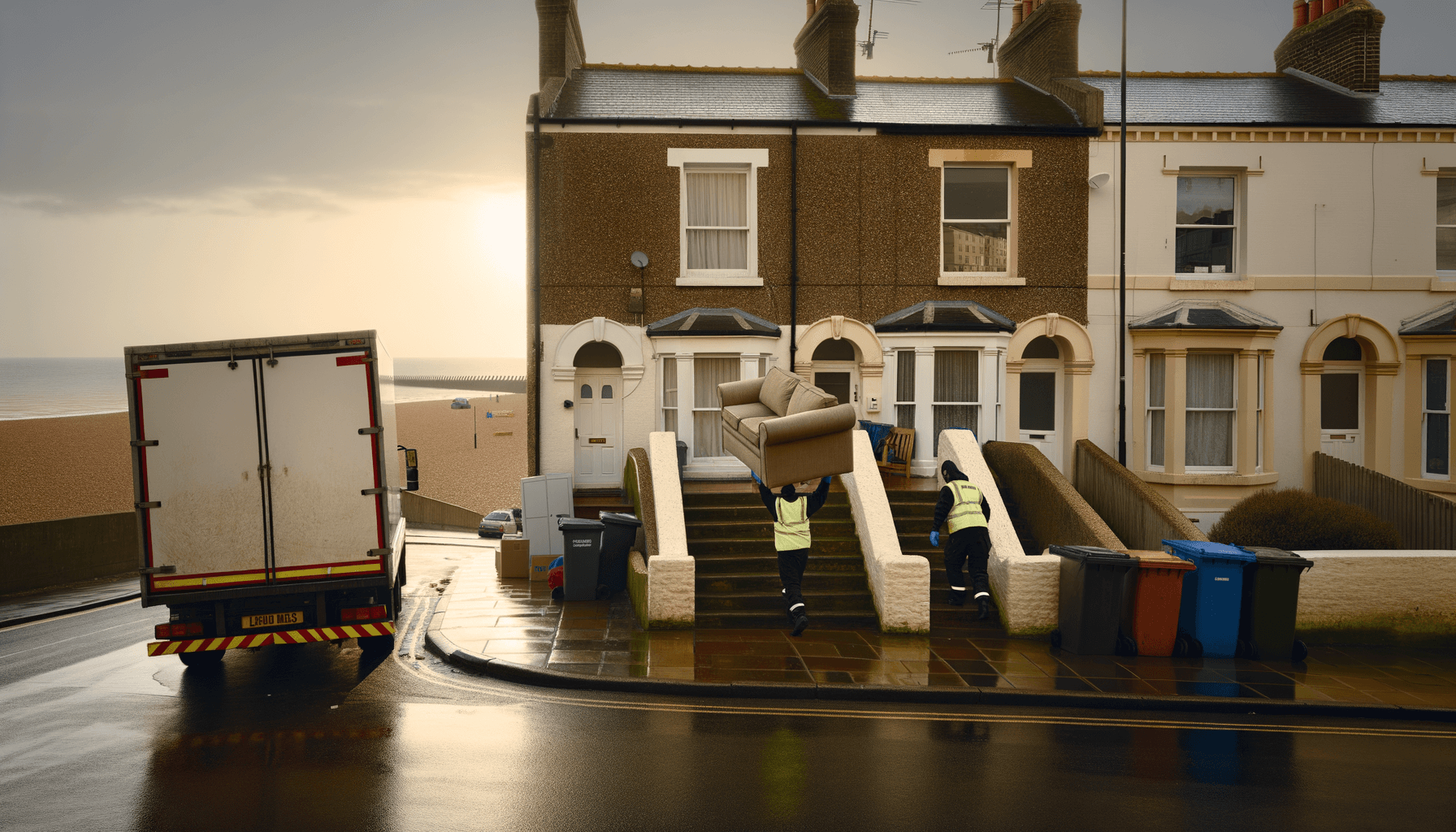
- A Victorian terraced house in a narrow street: if parking is 50 metres away and crew members must carry bulky items by hand, expect extra labour charges.
- A flat near the seafront with double-width loading restrictions: parking meters, pedestrianised stretches and busy footfall can make a one-day clearance take longer.
Access: stairs, lifts, gates and the long-carry penalty
Why access affects time and risk
Clearance teams price for the skill and effort required. Carrying a mattress down six flights without a lift is slower and riskier than loading a sofa from a ground-floor bungalow. Narrow doorways, awkward staircases, tight corners and fragile flooring increase the complexity of a job.
Specific access challenges—and how they change the quote
- No lift in a top-floor flat: each additional flight often adds a per-person per-hour charge because it slows removal and limits the number of items moved safely per trip.
- Garden-only access: items needing to be taken through a side gate or garden path can require extra staff and protective materials (e.g., boards to protect turf), adding to cost.
- Narrow alleys and steps: may require specialist handling or smaller vehicles, increasing vehicle hours and labour.
- Large, heavy or hazardous items: items such as boilers, waste oil, asbestos-containing materials or clinical waste require different disposal routes and licences, raising costs.
How clearance companies calculate the final price
Core elements in a house clearance quote
- Labour: number of operatives and hours worked, influenced by carries, stairs and volume of items.
- Vehicle and mileage: van or wagon size and the distance to and from the depot and disposal sites.
- Disposal fees: charges at transfer stations and recycling centres, which vary by material type.
- PPE and protective materials: floor protection, shrinkwrap or trolleys for fragile removals.
- Permits and fines: any paid suspensions, permits or costs incurred due to parking control.
- Specialist handling: for hazardous items, items requiring dismantling, or white goods that need professional removal.
Local disposal and recycling in Eastbourne
Eastbourne households benefit from local recycling options, but large-volume or mixed loads from a clearance often go to transfer stations and require sorting. Materials like wood, metal and green waste can often be recycled if separated. For local guidance on recycling and bulky waste in the borough, see the Eastbourne Borough Council recycling and rubbish page: https://www.eastbourne.gov.uk/recycling-and-rubbish/
Step-by-step: what to expect during an Eastbourne house clearance
1. Initial enquiry and photographs
Send a full postcode, photos of each room and notes about access and parking. Visuals cut down the uncertainty that causes higher provisional quotes.
2. Survey (virtual or in-person)
Many operators offer video surveys to assess stairs, lifts and access. For complex estates or bereavement house clearance, an in-person survey is sometimes required to estimate the labour and disposal needs accurately.
3. Written quote
A comprehensive quote will list labour hours, vehicle size, disposal costs and any parking permit charges. It should also specify exclusions (e.g., hazardous waste) and state whether items will be recycled.
4. Booking and logistics
Agree on arrival times and parking plans. If you know a bay suspension or a residents’ permit is needed, share that so the crew can arrange it or you can apply through the council where required.
5. On-the-day clearance
Crews will triage items, remove to vehicle, protect flooring and sort for recycling. Expect a short confirmation of any last-minute discoveries that could change the price.
6. Disposal and paperwork
Legitimate firms will produce a waste transfer note and provide a receipt. If you are dealing with bereavement house clearance or probate matters, make sure this paperwork is retained for estate records.
How to get a fair, transparent quote — practical checklist
- Provide clear photos and exact postcode up front.
- List restrictions: no parking, permit zones, narrow access, flights of stairs.
- Identify bulky or hazardous items separately (mattresses, fridges, oil boilers, asbestos).
- Ask for a breakdown: labour, vehicle, disposal, permits.
- Request proof of licensing and waste handling (and keep the paperwork).
- Compare quotes on the same scope of work — don’t compare a basic uplift with a full clearance including labour for long carries.
For an organised approach to receiving accurate estimates, see our preparation checklist here: get your home quote‑ready with a step‑by‑step checklist.
Common client scenarios and tailored advice
Landlords clearing a tenancy
Speed is often important. If parking is tricky, book a morning slot and tell tenants to reserve the nearest bay if possible. Clearing the property of mixed waste (green, furniture, DIY debris) will typically require more sorting and disposal fees than just furniture removal.
Probate and bereavement house clearance
These clearances need sensitivity and accurate records. Estate executors should flag items to be retained and provide any keys. Because probate work often involves detailed sorting and valuation, allow extra survey time to avoid surprise charges.
Red flags and questions to ask before you hire
- Do they provide a written, itemised estimate that lists parking or access surcharges?
- Can they show a waste transfer note and explain where items are taken?
- Are they clear about additional costs for long carries, stairs or parking permits?
- Do they have local Eastbourne experience and references?
Final thoughts: getting a fair price in Eastbourne
Your postcode, parking and property access are not annoyances — they are fundamental cost drivers for house clearance. By sharing accurate details, photos and being realistic about parking and access, you’ll receive a fairer, more accurate quote. Whether you need city clearance, rubbish collection eastbourne, waste removal eastbourne or a bereavement house clearance, transparency up front protects you from hidden fees and ensures better service.
If you’re preparing an estate or planning a clearance, start with clear photos, your exact postcode and descriptions of parking and stair access — and use the linked checklist to be quote-ready. That small effort will usually save you time and money when the crew arrives.